The OTA Billboard Effect, Explained for Hostels
Why a Hostelworld or Booking.com listing keeps earning you bookings even when the booking lands on your own site, and how to make that work harder.
Published: 28 June 2026 - 9-minute read
The billboard effect is the quiet reason pulling off the OTAs almost always backfires. The idea is simple: plenty of travelers discover your hostel on Hostelworld or Booking.com, then open a new tab, find your website, and book direct, or just file your name away for next time. The OTA listing acted as a billboard. It advertised you to someone who became a direct guest, and you paid no commission on that booking. So an OTA isn't only a commission cost; it's also free, high-traffic advertising, and that changes the maths.
This is the honest explainer: what the billboard effect actually is, whether it's real, how to spot it in your own numbers, and how to make your OTA listings drive more direct bookings instead of fewer. For the wider channel-mix strategy, pair it with our guide to OTAs vs direct bookings.
What the billboard effect actually is
The term comes from hospitality research, Cornell's hotel school coined it studying hotels listed on Expedia: appearing on a big OTA measurably increases a property's own direct bookings, not just its OTA ones. The OTA is the billboard on the highway. Most people drive past, some pull in through the OTA itself, and a meaningful slice see the billboard, remember it, then come straight to you.
For hostels the effect is arguably stronger, because backpackers are research-heavy and price-sensitive. They browse Hostelworld to discover their options, shortlist a few, then cross-check each one on Google, Instagram, and the hostel's own site before committing. Your OTA listing is very often the first time a guest ever hears your name.
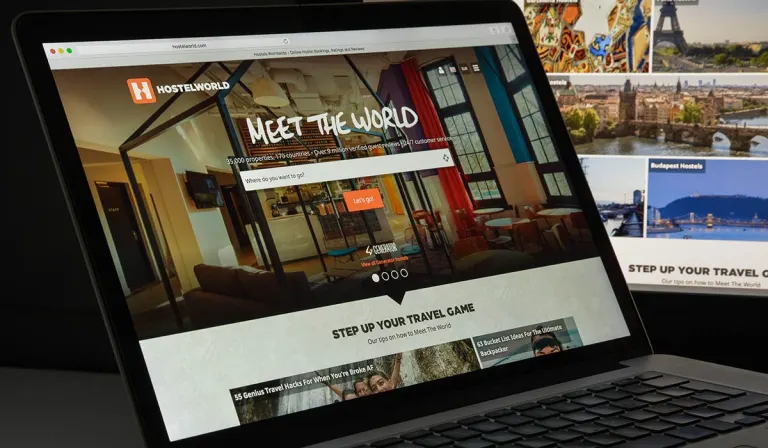
Why travelers find you on an OTA but book direct
It isn't disloyalty, it's just how people shop now. The OTA is the discovery layer; the actual decision happens across a dozen browser tabs. A few predictable things push that discovered guest toward your own site:
- 01
They're hunting for a better deal.
Once they have your name, the first instinct is to check whether booking direct is cheaper or comes with a perk.
- 02
They want to trust you.
A real website, good photos, an active Instagram, and visible reviews reassure them you're legit before they hand over money.
- 03
They're comparing the details.
Exact dorm types, the bar, the vibe, the precise location, these are often clearer on your own site than on a templated OTA listing.
- 04
They're repeat or word-of-mouth guests.
They found you on an OTA last trip, loved it, and now come straight to you, or a friend who did sent them your way.
Is the billboard effect actually real?
Yes, and it's well documented. The original Cornell research found that hotels listing on the major OTAs saw a measurable lift in their own direct bookings, the finding that gave the phenomenon its name. The mechanism has only strengthened since: travelers now research across more channels than ever, and a property that's invisible on the OTAs simply gets discovered by fewer people, full stop.
The honest caveat: the size of the effect varies a lot by property, market, and how memorable and findable your brand is. A hostel with a forgettable name and no real website captures almost none of it. A hostel with a strong name, great photos, and an easy direct-booking path captures plenty. The billboard works, but you have to make yourself worth the second tab.
How to measure your billboard effect
You won't get a perfect, clean number, nobody does, but a few signals together tell you whether the billboard is working:
- 01
'How did you hear about us?'
Ask at check-in or in your booking flow. A surprising share of your 'direct' guests first saw you on an OTA.
- 02
Branded search.
Watch searches for your hostel's actual name in Google Search Console. Rising branded search usually means more people discovered you somewhere (often an OTA) and went looking.
- 03
Direct-versus-OTA correlation.
When you add or improve an OTA listing, do direct bookings rise too, with a lag of a few weeks? That lag is the billboard at work.
- 04
Look-to-book.
Lots of OTA views relative to bookings isn't only lost sales, a chunk of those lookers are quietly booking you direct instead.
How to make your OTA listings drive more direct bookings
The goal isn't to hide on the OTAs, it's to turn every OTA impression into either an OTA booking or a direct one. That takes a listing people actually remember, and a direct path that's obviously the better choice:
- 01
Make the listing memorable.
A clear, distinctive hostel name, standout photos, and a description with some personality. Forgettable listings don't generate billboard traffic.
- 02
Own your branded search.
Make sure that when someone Googles your name, your own site is the first result, with a fast, obvious 'Book direct' button. Don't let an OTA, or a competitor, intercept your own brand.
- 03
Match parity, then beat it with a perk.
Never undercut the OTA on price, that can get your listing penalized, but make direct the better deal: a free towel, late checkout, a welcome drink, a small loyalty discount.
- 04
Make booking direct effortless.
A fast, mobile-first direct booking engine with live availability. If your site is clunkier than the OTA, the billboard visitor just books on the OTA after all.
- 05
Keep everything in sync.
Run rates and availability from one place so direct and OTA prices stay aligned; a channel manager handles this and prevents the parity slips that get listings quietly demoted.
The mistake: treating OTA commission as pure waste
The trap is looking at your OTA commission bill, deciding it's money down the drain, and pulling back hard, only to watch direct bookings quietly fall too. The commission isn't pure cost; part of it buys discovery you'd otherwise pay a marketing agency for. The smarter move is to keep the billboard up and shift the winnable bookings to direct over time, which is exactly the balance we lay out in OTAs vs direct bookings.
Ready to Manageyour dream Hostel?

The OTA billboard effect: FAQs
It's the well-documented phenomenon where listing on a big online travel agency (like Hostelworld or Booking.com) increases a property's own direct bookings, not just its OTA ones. Travelers discover you on the OTA, then go to your website to book or simply remember your name for next time. The OTA acts as a billboard, advertising you to guests who become direct bookings you paid no commission on.
Yes. It was identified and measured in hospitality research, originally at Cornell studying hotels on Expedia, which found that OTA listings produced a measurable lift in direct bookings. The size varies a lot by property and by how memorable and findable your brand is, but the basic mechanism, OTAs drive discovery that spills over into direct, is real and has only grown as travelers research across more channels.
Almost never, and rarely all at once. Because of the billboard effect, pulling off the OTAs doesn't just cost you OTA bookings, it cuts the discovery that feeds your direct channel too, so direct often falls alongside it. The better strategy is to keep a healthy OTA presence for reach while steadily shifting the winnable bookings to direct.
Make your listing memorable so people remember your name, make sure your own site ranks first for that name with an easy 'book direct' button, keep rate parity but add a direct-only perk (a free towel, late checkout, a small discount), and make your booking engine fast and mobile-first. The billboard brings them looking; an easy, slightly better direct option closes them.
You won't get a perfect figure, but watch a few signals together: ask 'how did you hear about us?' at check-in (many 'direct' guests first saw you on an OTA), track branded searches for your hostel's name in Google Search Console, and look for direct bookings rising with a lag after you improve your OTA presence. Together they show the billboard working.
The billboard effect is one piece of the channel puzzle. See the full picture in our guide to OTAs vs direct bookings, make direct the easy choice with a commission-free direct booking engine, and check our pricing when you're ready.