Dorm vs Private Rooms: The Right Mix for Your Hostel
Dorms fill the building, privates steady the money, and most operators inherit the ratio instead of choosing it. Here's the math worth running before you move a wall, and the ways to test a new mix without drywall.
Published: 12 July 2026 - 9-minute read
Every hostel floor plan is an argument between two business models. Dorm beds are your volume engine: more sellable units per square metre than any other accommodation format, priced for the most price-sensitive traveler on the internet. Private rooms are your rate engine: fewer units, higher prices, calmer demand, and margins that survive a slow week. Most advice treats the mix as settled, you inherited a building, you bolted bunks into it, done. It isn't settled. The dorm-to-private ratio is one of the biggest revenue decisions you own, and one of the few you can actually change.
This guide walks through who really books each, the per-square-metre math worth doing before anything structural, the mistakes that quietly cost operators for years, and how to test a different mix with the rooms you already have. For where beds and privates sit in the wider picture of how hostels make money, start there, this page zooms into the mix decision itself.
Two products that happen to share a roof
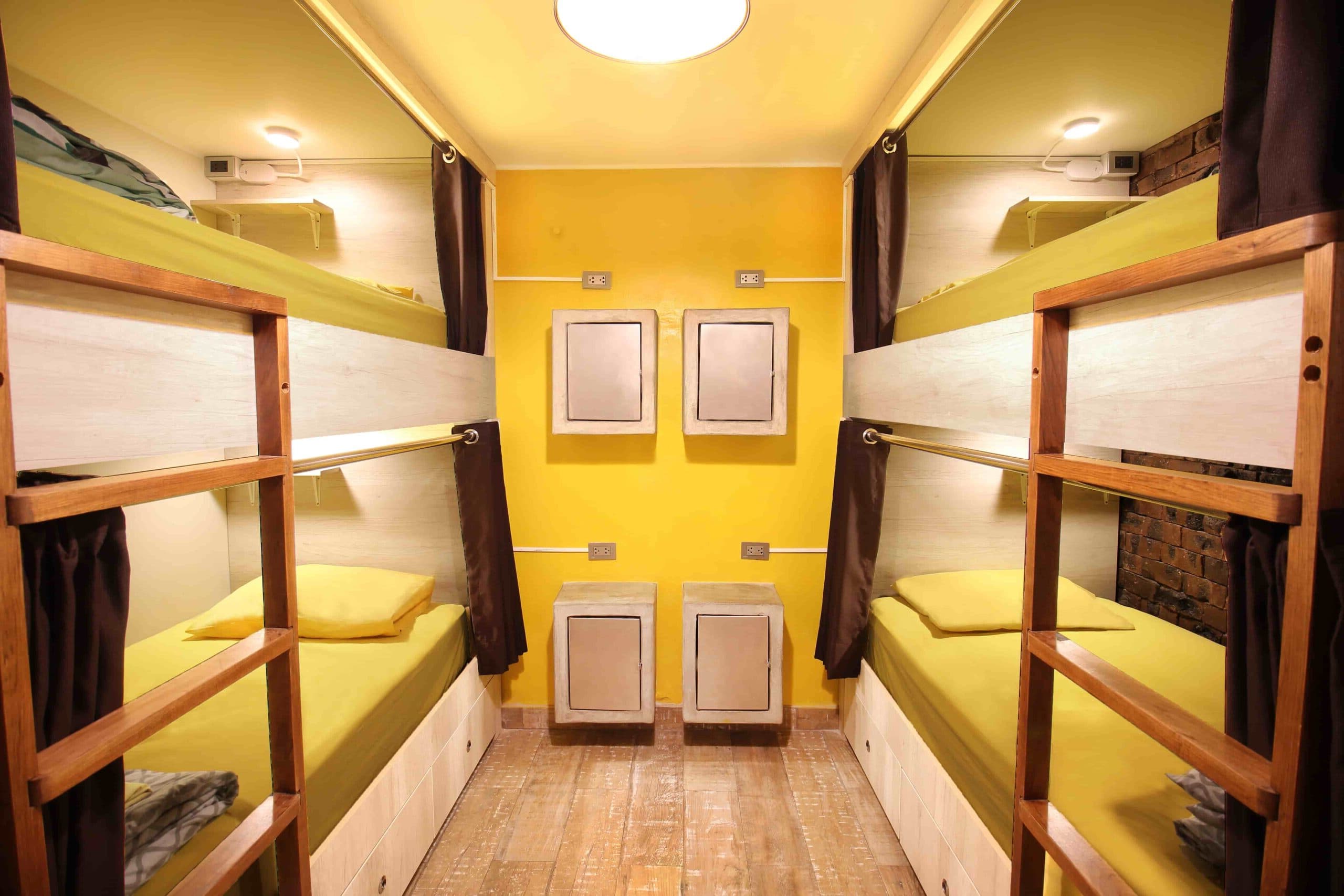
A dorm bed and a private room aren't two sizes of the same product. They sell to different people, at different prices, through different search filters, with a different cost per stay. A 6-bed dorm is six separate sales, six check-ins, six sets of linen, and six chances at a review. A private double is one sale, one changeover, and usually one couple who never touches the common-room kettle.
That's why hostels that treat privates as 'dorms with a door' underprice them, and hostels that treat dorms as 'cheap privates' overprice them. The two follow different demand curves: dorm demand swings hard with seasons and events, private demand is steadier and far less price-sensitive. Your mix decides how much of each curve you're exposed to.
Who actually books each (and why it matters)
The mix question is really a guest-mix question. Every dorm bed you add courts one crowd; every private courts another. Roughly:
- Dorm beds pull solo backpackers, budget travelers, and anyone booking on price and vibe. They compare fifteen tabs, book late, cancel more, and make your common room feel alive, the atmosphere your reviews run on.
- Private rooms pull couples, friends who've outgrown bunk beds, remote workers with calls to take, and older travelers who want the hostel's social floor with a door that locks. They book earlier, stay longer, and flinch less at price.
- Female-only dorms aren't a third product so much as insurance: plenty of solo female travelers filter for them and never see a listing without one. Converting a single dorm can unlock demand that was invisible precisely because the filter excluded you.
- Groups sit in between. A 6- or 8-bed dorm doubles as a bookable unit for a friend group, a buy-out sale that behaves like a big private. If groups are a real segment in your city, mid-size dorms earn a second job. For pricing, deposits and the rooming list, the group-bookings playbook goes deeper.
The math: revenue per square metre, then reality
Start with the ceiling. Say a 20-square-metre room fits a 6-bed dorm at €20 a bed, or a private double at €70. Full house, the dorm grosses €120 a night against the private's €70, on paper, dorms win nearly two to one. That arithmetic is why hostels exist at all, and it's true as far as it goes.
Now subtract reality. The dorm's €120 needs six separate bookings, six commissions, six linen changes, six lockers, at a rate that lives in the most price-sensitive corner of the market, so the low season hits it first and hardest. The private's €70 comes from one booking that cancels less, books earlier, and holds its rate while the dorm is discounting. Count the servicing cost per guest and the price stability, and privates often come out with the better margin per square metre even when dorms show more revenue, which is exactly why a handful of privates steadies a hostel's whole P&L.
There's no universal winner in that math. It flips with your occupancy, your season shape, and your city's guest mix. The point is to run it with your own numbers, room by room, before you decide anything involving a wall.
How to choose your mix: five questions before the floor plan
There's no golden ratio, but there is a right order of questions:
- 01
What does your city sell?
A party destination with festival spikes leans dorm-heavy; a hiking or culture town full of couples and older travelers supports more privates. Watch which room types sell out first at the places around you, that's demand talking.
- 02
How seasonal are you?
The deeper your low season, the harder privates work: their steadier demand and rate resilience carry the months when dorm demand disappears.
- 03
What does the building allow?
Bathrooms per bed, window placement, noise paths. A private next to the common room collects the complaints a dorm would have absorbed.
- 04
Who cleans, and when?
Six dorm turnovers cost more housekeeping than one private changeover. If your team is thin, every extra dorm bed adds load the revenue has to justify.
- 05
Where do groups fit?
If group demand is real in your market, mid-size dorms you can sell as buy-outs give you a third product without building anything.
The mistakes that lock in for years
Room-mix mistakes are expensive because they're bolted down. These are the ones operators admit to after the fact:
- Copying the hostel next door. Their mix reflects their building and their booking history, not your market. The most honest data you have is which room types sell out first in your own calendar.
- Cramming beds into the common room's space. Two more dorm beds earn less than the atmosphere they replace, reviews, repeat bookings, and bar revenue all run on that room. It's the most expensive space in the building to cannibalize.
- Treating privates as an afterthought. A private priced like 'a dorm plus something', photographed with someone's laundry in frame, sells like an afterthought too. The guest booking a private is comparing you to budget hotels and apartments, not to your dorms.
- Going all-dorm because the ceiling math said so. One hundred percent dorms means one hundred percent exposure to the most price-sensitive, seasonal, cancel-happy demand there is. The theoretical maximum revenue comes bundled with the maximum volatility.
- Ignoring what the OTA filters see. No female-only dorm, no private option, every filtered search that excludes you is demand that never shows up in any report.

Changing the mix without betting the building
The best thing about the mix decision is that parts of it are reversible. Before anyone quotes you for drywall, test with the rooms you already have:
- Sell a dorm as a buy-out. List a 4- or 6-bed dorm as a whole bookable room for groups and families. If it keeps selling as a unit, you've found private-shaped demand without moving a screw.
- Flip seasonally. Some hostels run a room as a dorm through the summer surge and as a private through the quiet months, one steady €60 booking beats four empty €15 beds.
- Watch the sell-out order. If privates are always gone first while dorms linger, or the reverse, your calendar is telling you the mix is wrong. That signal is free; construction isn't.
- Then price the two like different businesses. Whatever mix you land on only earns what your rates allow, dorm beds move often in small steps, privates hold steadier and higher. We cover that whole side in dynamic pricing for hostels.
Ready to Manageyour dream Hostel?

Dorms vs private rooms: FAQs
Per square metre, dorms usually have the higher revenue ceiling, six €20 beds out-gross one €70 double. Profit is another matter: a private is one booking to service instead of six, cancels less, books earlier, and holds its rate through the low season, so its realized margin often comes out ahead. The honest answer is that it depends on your occupancy and season shape, which is why the per-room math is worth running with your own numbers.
There's no universal ratio, and anyone quoting one is describing their own building. The mix follows your market: party cities with strong solo-backpacker demand support dorm-heavy layouts, while seasonal or couples-heavy destinations reward more privates. The practical method is to watch which room types sell out first across a full season and shift toward whatever is always gone.
In most markets, yes. A large share of solo female travelers filter for female-only dorms on the OTAs and never see a listing without one. Converting a single mixed dorm is usually enough to appear in those filtered searches, and the demand it unlocks tends to be invisible beforehand, precisely because the filter was excluding you.
For a guest, dorms are cheaper and far more social; a private buys quiet, privacy, and somewhere to take a call while keeping the hostel's common spaces and atmosphere. For an operator, that same trade shows up as two separate demand pools, which is why hostels that offer both, clearly priced and properly photographed, capture travelers at both ends and everyone moving between them.
Bigger dorms pack more beds per square metre, but the rate per bed falls as the room grows, a bed in a 12-bed dorm usually sells below a bed in a 4-bed, and reviews get harsher as sleep quality drops. Mid-size dorms of 4 to 8 beds are the workhorse in most hostels: dense enough to earn, small enough to sell as group buy-outs and keep reviews intact. Test it against your own market rather than assuming bigger is better.
Yes, it's a standard hostel play. List the room as individual beds and as a whole unit (a buy-out), and let whichever sells first close the other. The one requirement is inventory that handles bed-level and room-level availability on the same calendar, so the two listings can never double-sell. That's a PMS job, not a spreadsheet one.
Whatever split you land on, every room type earns more when guests can book it commission-free on your own site, that's what a direct booking engine is for. And once the mix is set, the next lever is rates: see dynamic pricing for hostels.