Dynamic Pricing for Hostels: A Practical Playbook
How to move your rates with demand, fill more beds, and protect your margin, without a data-science degree or a pricing tool you'll never open.
Published: 27 June 2026 - 11-minute read
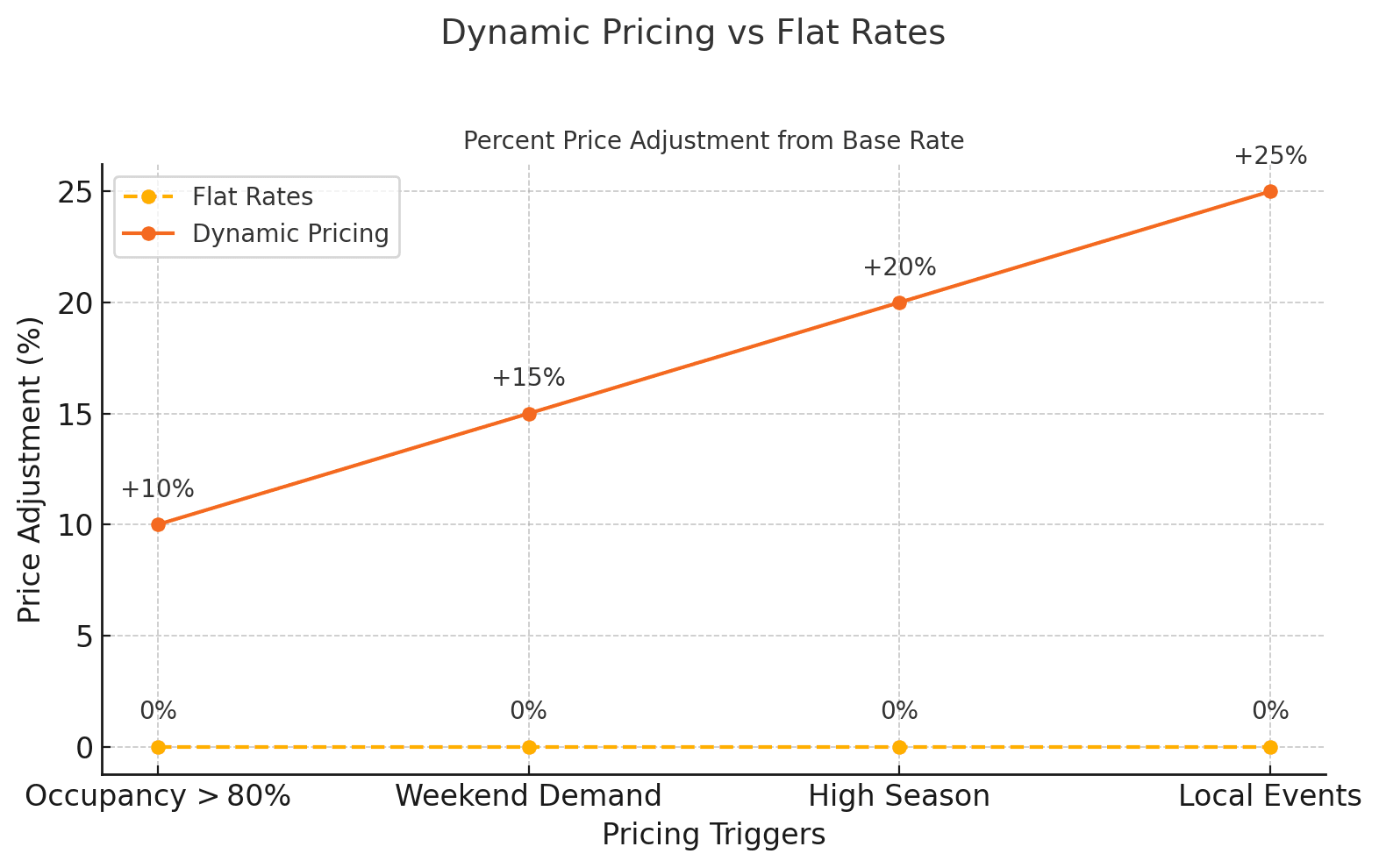
Here's the short version: dynamic pricing means your rates move with demand instead of sitting at one flat number all year. A bed that's worth €18 on a dead Tuesday in February might be €34 the weekend a festival rolls into town, and both prices can be right. Done well, it's the cheapest revenue you'll ever add to a hostel, because you're not buying anything or building anything. You're just charging what the night is actually worth.
Done badly, it spooks guests, breaks your channel manager sync, and trains the market to wait for your fire-sale. This guide is about doing it well, starting from a whiteboard and a spreadsheet, and only reaching for software once it genuinely pays for itself.
What dynamic pricing actually means for a hostel
Most pricing advice is written for hotels, and hotels sell rooms. You sell beds, and that one difference changes everything. A 12-bed mixed dorm isn't a single product with one price; it's twelve little products that can each sell to a different person, from a different country, on a different channel, at a different moment. Dynamic pricing is just the discipline of letting the price of those beds breathe with demand.
It is not 'always charge more.' It's 'charge the right amount for this specific night,' which sometimes means dropping a bed to €12 at 6pm rather than sleeping it empty, and sometimes means holding firm at €40 because three sold-out hostels down the road just sent their overflow your way.

Chase RevPAB, not occupancy
Occupancy is the number that feels good and lies the most. You can run 100% occupancy and still lose money if you got there by dumping beds at €9. The number that tells the truth is RevPAB, revenue per available bed: total bed revenue divided by the beds you had to sell.
A 78% night at €26 a bed beats a 100% night at €15, every single time, and it's easier on your housekeeping team too. If you only adopt one new number after reading this, make it this one. Our RevPAB calculator does the math if you'd rather not.
- RevPAB = total bed revenue ÷ total available beds. It folds price and occupancy into one honest number.
- ADR (average daily rate) tells you what you charged. RevPAB tells you what you actually earned per bed you put on offer. Watch both, trust RevPAB.
- Track RevPAB by week and by channel. The gap between your direct RevPAB and your OTA RevPAB is usually wider than owners expect, and it's an argument for your own website.
The levers that should move your rate
You don't need an algorithm to price well. You need to watch a handful of signals and react to them on purpose instead of by accident. These are the levers, roughly in the order they matter for a typical hostel.
- Pace and pickup. How fast beds are selling for a given night versus the same point last year. Filling faster than usual? You're underpriced. Crickets? You're either too high, or the date is just soft.
- Lead time. Backpackers book late. A bed still open 48 hours out is worth defending with a small drop; the same bed three weeks out can hold its price and wait.
- Events and demand spikes. Festivals, matches, conferences, long weekends. This is where the real money hides, and where most hostels leave the most on the table.
- Day of week and seasonality. Know your shape. A party hostel peaks Thursday to Saturday; a digital-nomad spot might be steady midweek and dead on Sundays. Price your shape, not the calendar's.
- The street around you. Not to copy it, but to read it. Three hostels selling out is a signal to hold; three slashing prices is a signal something's off with the date, not with you.
Price dorm beds and private rooms like different businesses
Dorm beds and privates behave like different products, and pricing them the same way is a quiet, steady leak. Dorm beds are high-volume, price-sensitive, and bought by people comparing fifteen browser tabs. Privates are lower-volume, far less elastic, and often bought by couples or older travelers who will happily pay for a door that locks. How many of each to run in the first place is its own decision, we take the whole room-mix question apart in dorms vs private rooms.
- Move dorm beds more often and in smaller steps. They react fast, €2 up or down genuinely shifts your pace.
- Hold private rooms steadier and higher. The person booking a private isn't filtering by €3, so don't give margin away chasing a sale that was never about price.
- Run the dorm buy-out math. Sometimes selling all twelve beds privately to one group beats the bed-by-bed projection, and sometimes it's a trap. Calculate it, don't eyeball it.
A rule-based system you can start on a whiteboard
You do not need to automate anything to begin. Most of the lift comes from a handful of if-this-then-that rules you could write on a napkin. Here's a starter set that's worked for plenty of small properties:
- 01
Set a floor and a ceiling per season.
The floor is the lowest you'll ever go (below it, you're donating beds); the ceiling is your 'sold-out-city' price. Everything else happens between them.
- 02
Three tiers a night: low, standard, high.
Default to standard. Drop to low when a near date is lagging on pace; jump to high when pickup is hot or an event lands.
- 03
The 48-hour rule.
If a date sits more than ~20% below your usual pace at 48 hours out, take one step down, not five. Small nudges checked daily beat one panicked slash.
- 04
The event rule.
The moment you hear about a festival or big match, lift those dates and add a minimum stay, so a stray one-nighter can't block a three-night windfall.
- 05
Never undercut your own direct rate.
Your website should never cost more than an OTA for the same bed. Match the OTA, then beat it with a perk, free towel, late checkout, a drink, instead of a lower number.
Events and demand spikes: where the real money is
If you do nothing else from this guide, do this. The difference between a hostel that prices events and one that doesn't is the difference between a good year and a flat one. A single sold-out festival weekend, priced properly, can out-earn a slow fortnight.
Spend one afternoon building a demand calendar: drop every festival, match, conference, graduation, and public holiday for the next twelve months into your calendar. Then lift rates on those dates early, before your competitors wake up, and add minimum-stay rules so a single Friday-night booking can't block a guest who wants Friday through Sunday.
- Lift early. The best rates are gone before the event is even on most travelers' radar.
- Protect the window. A 2, sometimes 3, night minimum stay on peak dates stops one-nighters from carving up your best weekend.
- Stay confident, not greedy. A ceiling that's triple your normal rate buys you cancellations and one-star reviews about 'gouging.' Charge what it's worth, not what you can get away with for one night.
Surviving the low season without trashing your rates
The instinct in a dead week is to slash prices and pray. Resist it. Deep public discounts are a one-way ratchet: they cap what guests believe you're worth, they gut your RevPAB, and they're brutal to climb back up from. There are smarter ways to fill a quiet calendar.
- Add value instead of cutting price. Free breakfast, a free walking tour, a welcome drink. Guests feel the deal; your rate integrity survives the winter.
- Use length-of-stay offers. 'Stay 4 nights, pay for 3' fills the calendar without publishing a humiliating nightly rate the whole market can see.
- Discount in private, not in public. Last-minute apps and member-only rates let you cut prices for people who'll never see your standard rate, without telling the entire street you're desperate.
- Lean on direct. Low season is exactly when your commission-free direct booking engine and a friendly email to past guests earn their keep.
Mistakes that quietly cost you money
Most pricing losses aren't dramatic; they're small, repeated, and invisible until you add them up at year end. These are the usual suspects:
- Flat pricing all year. The most expensive habit in the building. If festival week and dead February cost the same, you're leaving thousands on the table.
- Racing to the bottom. Matching the cheapest hostel on the street is a contest you win by going broke.
- Editing rates inside OTA extranets. Set the price once in your PMS and let the channel manager distribute it. Hand-edits are how parity breaks and overbookings sneak in.
- Pricing on gut instead of pace. 'It feels busy' is not data. Two minutes with your pickup report beats a hunch every time.
- Forgetting the cancellation curve. Beds cancel. If you stop selling the second you hit 100%, you'll wake up to no-shows and empty beds. Price for the curve, not the snapshot.
When to stop doing this by hand
Rules and a spreadsheet will carry a small hostel a long way. But there's a point, usually somewhere past 40 or 50 beds, or the moment you're running more than one property, where checking pace by hand every morning stops scaling and starts costing you sleep.
That's when a proper revenue management system earns its keep: it watches your pace, reads the market and your event calendar, and nudges rates inside the floor and ceiling you set, so you're no longer the bottleneck. The goal isn't to hand the keys to a robot. It's to automate the boring 80% so you can spend your judgment on the 20% that genuinely needs a human, the festival weekend, the big group inquiry, the strange date the model just doesn't understand.

Ready to Manageyour dream Hostel?

Dynamic pricing for hostels: FAQs
Start with three things: a floor and ceiling per season, three price tiers (low, standard, high) per night, and a five-minute daily check of how fast each near date is selling. Drop a tier when a date lags on pace; raise one when it's hot or an event lands. You can run that on a spreadsheet for a long time before you need a tool.
Yes. Dorm beds are price-sensitive and react to small moves, so adjust them more often and in smaller steps. Private rooms are far less elastic, the couple booking one isn't filtering by €3, so hold them steadier and higher. Pricing the two identically is one of the most common ways hostels quietly leave money on the table.
Not if you do it sensibly. Travelers already expect a festival weekend to cost more than a quiet Tuesday; that's normal, not gouging. What annoys guests is wild last-minute swings and a website that's pricier than the OTA for the same bed. Move rates within a sane floor and ceiling, keep your direct rate honest, and nobody blinks.
RevPAB, almost always. You can hit 100% occupancy and still lose money if you got there by dumping beds. RevPAB, revenue per available bed, blends price and occupancy into one honest figure, so it stops you celebrating a full house that didn't actually pay the bills.
Build a twelve-month demand calendar of every festival, match, conference, and holiday, then lift those dates early, before competitors react, and add a two-to-three-night minimum stay so a single one-night booking can't block a high-value window. Stay confident but not greedy: a price triple your normal rate invites cancellations and 'rip-off' reviews.
It doesn't, as long as you change prices in one place. Set your rate in your PMS and let your channel manager push it to every OTA at once. Parity breaks when people edit prices inside individual OTA extranets, so make 'change it in one place' a rule nobody on the team breaks.
Pricing is half the puzzle; the system you run it on is the other half. See how HostelMate's revenue management system and real-time channel manager keep every bed earning, then check our pricing when you're ready to make the switch.